Search This Blog

Showing posts with label Harpercollins. Show all posts

Friday, February 21, 2014

Book Review - Tapestry - Fiona McIntosh

TapestryTapestry by Fiona McIntosh

My rating: 4 of 5 stars


DUE MAY 2014

Another fantastic title from Fiona McIntosh.

This time she leads us to 1970's London which in turn leads us to 1714 Britain and the Jacobite rebellion against King George.

The authors characters are well written and engaging. You start on this massive journey with Jane Granger, who is determined to save her fiancé after he gets attacked. This journey involves taking charge of the past and helping a Lord of The Realm to escape the Headsman's axe. The fates of Will Maxwell and William Maxwell, Earl of Nithsdale are entwined and Jane will have to face a most difficult choice of what she wants if she is to find happiness.

I really enjoyed this book, in fact it only took me a couple of days to read it. I liked reading about Winifred, Jane, Will, Robin and Julius. All the characters well well rounded and interesting. What is even better is that this book is founded on an event that happened. The Count and Countess of Nithsdale were real life people who actually did what few people have done and Fiona does justice to the tale.

A very good book and highly recommended when it comes out :D

View all my reviews

Tuesday, July 16, 2013

Author Interview - Jo Spurrier 'Black Sun Light's My Way'

Jo Spurrier was kind enough to answer some interview questions when she came in for a signing.

Tarran - What drives you to write?
Jo - I have always been making stories up in my head and I have been telling them since high school. I wanted to see if I could do more with them.

Tarran - How did you come up with the idea for your novels?
Jo - The three main characters and basic storyline came first then when I was on disability, the overall story came together and I started to write it.

Tarran - Do you have a name for your computer?
Jo - No. All the computers are named after colours. My husband is a software engineer and it was his idea.

Tarran - Who is your favourite character and why?
Jo - Rastin, because he is the villain and by some measure the most interesting to write.

Tarran - Do you read a lot?
Jo - I don't read as much as I would like too. When I do read, I like to read fantasy and non fiction.

Tarran - Who are your favourite authors?
Jo - Katherine Kerr, Robin Hobb and Iain M Banks

Tarran - Do you have any advise for getting started?
Jo - Be persistent as it takes a long time and work. Be prepared for knock backs. Also, don't feel like you have to work on the same novel all the time. If you are having trouble with one, work on another and that may give you the inspiration to make the first one better.

Tarran - Do you have any 'real life' people in your characters?
Jo - No - all are made up.

Tarran - What's next?
Jo - I am working on another series. Think, India/Greece city states with magic as technology. There is a lot of research to be done.


Friday, February 3, 2012

Book Review - Triad of Being #3 Light - Field - Traci Harding


The Light-field by Traci Harding

My rating: 5 of 5 stars


Once again I am blown away by one of Traci's books. I throughly enjoyed Light-Field. The story picks up basically straight after the 2nd book - Universe Parallel. There is more information revealed with the characters and more story lines completed AND started!

Yes, my friends - this is not the last book in the series!
It feels like Traci is going for the Feist type of series where the story interlocks with the previous books/series. To understand what I mean, I believe that you should read them in this order to get a real grip on the series:

Ancient Future
Celestial Triad
Mystique
Then - Triad of Being

I get excited everytime a new book of Traci's come out and I really want to see how Traci brings together the end of this series. I think it is going to be fantastic!!! If you haven't read Traci Harding - then go out today and pick up a copy of Ancient Future!! You won't regret it.

View all my reviews

Wednesday, January 25, 2012

Author Interview - Robin Hobb

The awesome Robin Hobb AKA Megan Lindholm kindly agreed to answer a few questions for us.  


Why do you think people love the Farseer and Tawny Man series so much?

                 I continue to be astonished by it.  If I could quantify it exactly and tell you why people have been so receptive of that story, I’m sure I’d be a very wise person.  As a writer, it has been an amazing and humbling experience to have readers enjoy the characters that I myself love so much. 

         Is it hard to switch from Robin Hobb to Megan Lindholm?

                  Not at all, strange to say.  When I get a story idea, I immediately know which voice can best tell it.  It’s not that all Hobb stories must be epic fantasy or medieval; I think it has to do with pacing and voice.  There are some stories that demand a more contemporary sound and a vernacular vocabulary.  Others want to be told in a leisurely and detailed way. 

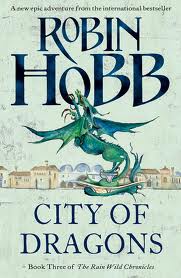
         Can you explain a little the premise of the Rain Wild Chronicles, the third book in that series City of Dragons is due to be released in Australia in March. 

                  That’s hard to do while avoiding spoilers, but I’ll try.  In the writings of the Elderlings there were mentions of a city called Kelsingra.  The dragons that hatched in Dragon Keeper have partial memories of such a city.  But if it ever existed as a place where dragons and Elderlings dwelt side by side, does it still stand or is it, like the other Elderling cities, buried deep in the soggy soil of the Rain Wilds. The Chronicles tell the tale of the dragons that hatched and the outcast Rain Wild youngsters who became their keepers as they make a journey which may not even have a real destination.  Along the way, both hatchlings and their keepers will find that their destinies are much different from what they imagined.  

How different is your writing style when you write as Megan or Robin?
 
I believe the two styles are substantially different, definitely enough to justify having two different names! I think that Robin writes in a way that is more detailed and more emotional than Megan’s style.  It’s a leisurely telling of a tale that has lots of incident and perhaps subplots.  Megan tends to write shorter, in a more head-long style.  That’s why there are a lot more Megan Lindholm short stories than Robin Hobb has.  Give Robin a 10,000 word limit and she takes 40,000.

         If you could have a cup of tea/coffee with someone from history who would it be and why?

                  That’s an easy one.  Julius Caesar.  Can I say I’d like to meet him at the time of the Gallic campaigns?  When he was an ambitious soldier clawing his way up and keeping such a fascinating journal of his observations.  I first encountered his writing when I was given passages to translate back in high school.  That’s when my fascination with him began.  In some ways, he is writing a military report, and other times it sounds like an anthropologist or sociologist. It’s interesting to wonder what direction the Roman Empire would have gone if he had not been assassinated. 

        Have you got a name for your computer?

                  Not one that is printable.   Seriously, no.  I have silly passwords for various places I go online, but I’m not sharing those here!  I guess I don’t really name things.  Cats, dogs, yes.  All my kids and grandkids have odd nicknames.  But I just don’t give objects names.

         Is it harder to start out writing fantasy overseas being a woman? Is that why you choose the moniker Robin Hobb to write the Farseer books?  

      There were a lot of reasons to take a new name for the Farseer Trilogy and the books that followed. The main one was that I was writing in a very different voice, and in a different slice of the fantasy genre.  That said, I did deliberately choose a name that could be either male or female.  Assassin’s Apprentice was written in first person young male, so having a possibly male name as author lowered the threshold of disbelief for some readers.  But I think that most fantasy readers don’t really care that much about the author’s name or age or gender or age; they just want a good story.  Fantasy readers seem to be rather adventurous in what they’ll pick up and read. 
     
       What do you love most about writing?

                  Well, when you write a story, you can make the world in your story make sense!    In this world, so often, things just don’t make any sort of sense.  Fantasy especially gives me a very wide playing field for thinking of how things ‘ought to be’ or considering all those ‘what if’ questions that we all have. 
                  By my nature, I love solitude, and writing allows me to seek a quiet place, to be alone with my characters and to tell my story.  I really like to work alone through that first draft.  I venture out there, exploring unknown territory, not knowing who I’ll meet or where they will carry the story.  There is a lot of ‘writing’ that isn’t done at a keyboard, and I like to be able to work on the story while I’m working on the yard or hanging out laundry.  I get to have all these lives at once.  It’s a bit like making a movie, except I have an unlimited budget for special effects.  I get to journey to the faraway places, imagine the soundtrack, select the wardrobe, and then I get to play every role.  I am so blessed to be able to do what I love and to make a living at it.

         What is your favourite book by Megan and your favourite book by Robin?

                  My favorite Megan Lindholm book has to be Wizard of the Pigeons, a contemporary fantasy set in Seattle.  I had so much fun doing the research for that, and ended up with my own flock of pigeons as a result of it.
                For Robin Hobb, I’ll say Assassin’s Apprentice.  It’s where the tale of the Realm of the Elderlings begins, and it was also the start of my friendship with Fitz.  I’ve known him quite a few years now.  We’ve had some good times together. 

        If you were to give one piece of advice to wanna-be writers, what would it be?

                  Don’t try to be a writer.  The people who say to me, “I want to be a writer!” generally don’t achieve that ambition.  It’s the ones who say, “I want to write!” who get there.  And they get there one keystroke at a time, by beginning right here and right now.  Don’t wait until you are more experienced or older or educated, don’t even wait until you have more time.  You will never have more time than you have right now.  (In fact, the longer you wait, the fewer days you have to write!  How’s that for a scary idea?)  So start now and write what you know, which is who you are and where you are, with a bit of magic tossed in.  Just get busy and hit those keys.  Writing is what makes you a writer.

   City of Dragons is the third book in the Rain Wild Chronicles and is due for release in March 2012. If you want any more information about Robin and her books, then go to her website here.
If you love fantasy and haven't read Robin yet, then do so!! 


Wednesday, September 28, 2011

Book Review - End Specialist - Drew Magary

The End SpecialistThe End Specialist by Drew Magary

My rating: 4 of 5 stars

Reviewed by Tarran Jones

This book was interesting. 

It is the year 2019. The cure for ageing has been discovered. If you get the cure, you will never suffer from the ache and pains of the old, you will always retain your youthful looks and you will never leave your loved ones behind. Do you get the cure?

The book opens with a warning. Recordings have been found about the years when the cure for ageing was discovered. In this world, you can still die of disease, murder etc - just not old age. Unseen footage and notes from a man called John Farrell. You follow John's very long life as he takes the cure and watches all he loves turn to dust. A very moving and disturbing tale for you can actually see where the world would end up if there really was a cure for ageing. There are Peter Pan babies (babies who were given the cure and will be forever babies) Cycle marriages, Birth date tattoos. It opens up the question,is mankind really ready for long lives and what damage would be done to the planet if we were?
A thought provoking book that I enojyed. I wouldn't classify it as a fantasy or even paranormal novel. It is a well written fiction based on what if. This is due to come out 29/09/2011 in Australia. A great read for bookclubs.

View all my reviews

Sunday, September 11, 2011

Book Review - Hounded - Kevin Hearne

Hounded (Iron Druid Chronicles, #1)Hounded by Kevin Hearne

My rating: 4 of 5 stars


This was a great start to a new series. The writing style was clear and funny. The Druid had attitute and I liked how the author didn't make him shoot fireballs out of his hands. The Celtic history and pronounciation guide that is included in the book is fantastic. A highly recommended read and I will be reading the next in the series.


Wednesday, May 25, 2011

Hounded - Kevin Hearne


Atticus O'Sullivan
Though my existence is just now being made public, I've been walking amongst you (and, presumably, all the people now dead that were walking around before you) for more than two thousand years. I'm a Druid—the last real Druid, as a matter of fact. If I can keep my new apprentice alive for the twelve-year training period, there will be two of us.

You're probably wondering how I managed to live so long. And you might also be wondering why I didn't single-handedly stop the Industrial Revolution so we could have avoided things like oil companies and fast food and geckos who can save you fifteen percent or more on car insurance. The answers to all those questions are in Hounded, a book written by Kevin Hearne, but the short answer is this: I was hiding.

I call myself Atticus O'Sullivan these days. (There was a terrifying three-month period in the 1950's during which I went by the name Nigel, but thank the Gods Below that's all past.) I have an Irish wolfhound that I jokingly named Oberon after Shakespeare's king of the Fae. I have bound his consciousness to mine so that we can speak mentally, and he keeps me grounded and appreciating the simple pleasures of life. As I write this, he's wondering when I'm going to stop and cook up some sausage for him.

What would I give to have no worries but a hungry hound! Unfortunately, the world's pantheons and the Fae aren't willing to leave me alone, now that my hideout in Arizona has been exposed. I'm not talking about some modern, sanitized version of the Fae, by the way: The true Fae are badass descendants of the Tuatha DĂ© Danann, who went underground long ago. First among the Fae is Brighid, goddess of poetry, fire, and the forge, though she might be a goddess of manipulation as well, considering what she did to me recently (it's in the book). I have an uncomfortable suspicion that she's not through with me yet.

The best thing for me to do—the smart thing—would be to run and hide somewhere else. Thing is, I've been doing that for two thousand years, and I'm a bit tired of it. I've got my Irish up now, and I figure those who want a fight from me can have one for free.

Kevin Hearne is writing down my story as fast as I can tell it. It's a series now called The Iron Druid Chronicles, which I like because it makes me sound like a total badass. The second book in the series, Hexed, comes out in early June and the third book, Hammered, will be released in early July.

You can read the first six chapters of Hounded for free right here and if you'd like to go mess with Kevin a little bit, that would amuse me no end. Kevin has a blog here and you can follow him on Twitter here.

Sláinte, friends. May harmony find you.

Happy Reading!
Atticus O'Sullivan
(as dictated to Kevin Hearne)

Taken from the HarperCollins/Del Ray Newsletter 2011

Saturday, March 19, 2011

Publishing in Australia

Publishing in Australia

I have written this article and compiled a few posts from various authors on this subject as we get asked about it a lot. How does one get published? Is it better to self-publish? How do I publish an E-book? Who will stock my book?

All these questions we are faced with and we can only discuss from the book store point of view. Where we get books from, what you need to know if your a self published author seeking for us to stock your books.

We decided to go to the people who would know more and put a call out for authors to tell us their tales of how they become published and what route they would recommend for first time writers.

Marianne de Pierres– author of the acclaimed Parrish Plessis and Sentients of Orion science fiction series and Tara Sharp crime series has this to say.

Getting published is in many ways much easier than it used to be. But being noticed and selling your work is actually getting harder.

The advent of internet publishing and publicity has been a double edged sword for writers. Major publishers are tightening their belts because of the competition. And while there are so many online markets now, and self-publishing in e-book form is about to explode, with that has come the intense competition to be heard/seen/read.

My advice to any writer starting out is not to settle for second best in their own work, merely to get content out there. The temptation is strong ... I mean you can publish perfectly viably on your own blog if you wish, but that doesn't mean the content is always as good as it can be. The current publishing system is full of checks and balances. Many sets of eyes see a novel before it hits the shelves, much thought and work goes into it. Don't forget that if you're considering going the self-publishing route.

However, if you're struggling to be looked at by major publishers, there are some quality small press publishers around who are definitely worth pursuing. That can be a rewarding and profitable experience, but be prepared to roll up your sleeves an help out with your own publicity and marketing. The time of the reclusive, luddite writer is over.

MDP

We can attest to the fact authors need to be more active in promoting their books as well. Most book stores will be putting up banners, signs, staff cards and other promoting materials but sometimes it just is not enough. Then you get the small majority of book store staff who really don't care what they are selling. Authors need to take a more active role in promoting – which most are starting to do. The internet is a wonderful thing these days.

Ian Irvine has written 26 novels to date, including the international bestselling 11-book fantasy sequence, The Three Worlds, an eco-thriller trilogy about catastrophic climate change, and 11 books for children and young adults. He has this to say:

Every year, the major Australian publishers each receive thousands of unsolicited fiction manuscripts, and literary agents are also deluged by them. But very few of these manuscripts are ever published, probably less than 1%. Why is this, and is it easier to get published in Australia than it used to be, or harder?

It’s always been hard to get published, anywhere, and it was especially hard to get fiction published in Australia until 15-20 years ago, because until then most of the big publishers preferred to import books from their overseas operations rather than fostering local talent. This situation began to change in the late 1980s, and changed dramatically during the mid-1990s, when Australian popular fiction authors in certain genres, and notably in fantasy, began to outsell many of their big-name international counterparts. These early authors included Sara Douglass, Traci Harding, Kate Forsyth, myself, Jennifer Fallon, Sean Williams, Cecilia Dart-Thornton and Trudi Canavan, and Garth Nix for slightly younger audiences, among others, and all went on to considerable success internationally.

The success of these authors established a golden age for Australian speculative fiction both here and overseas. A large number of other authors have been published in this field in Australia since, and many of them have also had success in the international arena. And it’s certainly true that there are a lot more books being published in Australia today than there were ten years ago, so it’s difficult to argue that it’s harder to get published than it used to be.

But the problem is, the number of titles published in Australia has increased a lot faster than the number of readers. The same situation prevails with English-language publishing internationally. This means, for most authors who do get published, that the probable sales of their book are rather less than they would have been a decade ago. Because individual book sales are less, and also due to the increasing tendency of publishers to ‘pick winners’ and spend most of their marketing budget on these authors’ books, most books published today are not promoted in any meaningful way. And because they’re not promoted, most of these books do poorly, and their authors find it hard to get their next book published. One can’t blame publishers for this. Publishing is a difficult business and becoming more difficult every year, and they have to make a profit to survive.

And the future? Given the difficult international situation, allied to the deluge of self-published books, particularly ebooks, and competition from the internet, games and other new forms of entertainment, it can only become harder for authors old and new to gain enough sales of their books to stay in print. A lucky few will be picked as winners, and many (though not all) of them will succeed. The other winners will be those who either have a natural flair for, or a ruthless determination to succeed at, self-promotion. And the rest? Well, pray for luck.

With those figures you may feel what is the point? Some people though have pushed on and have gone the self publishing route.


Colin Taber writes:

I self published The Fall Of Ossard about 18 months ago (the title broke into the Borders Top 20 in mid October 2009). With a cover by Shaun Tan and a cover quote from Sara Douglass, the dark fantasy went well. Book 2 comes out in September (Ossard's Hope).

Kathryn White another self published author says:

A writer may be interested in self-publishing for a number of reasons. I chose to self-publish as I wished to have a few copies of my book to give out to family and friends and perhaps make the odd sale via my blog. Non-fiction authors who have a small but ready-made market, an author of a local history or a person who runs seminars in a niche area, may consider self-publishing.
I chose to publish my book with Createspace, a Print on Demand [POD] publisher. For me, POD was the logical choice as there is no minimum print run or upfront costs. Createspace assigned my book an ISBN at no charge. The interior of my book was uploaded to the site as a PDF document. Createspace offers templates and royalty free pictures that can be used to create a cover. Users have the choice of uploading their own cover.
When my cover was ready, Createspace set a minimum price for my book. I then set the cover price. The difference between the minimum price and the cover price is paid to the author as a royalty. POD authors who sell their books at a competitive price make very little profit. A physical copy of the book is only printed when one is ordered via the internet and then mailed to the purchaser.
Self-publishing may not be advisable for all writers. One of the major drawbacks to self-publishing is that there is no quality control. It is up to the author to ensure their work is formatted properly and free of errors. A self-published can be difficult to market. I advise writers interested in self-publishing to think about their goals and potential market. My experience of self-publishing is positive. It was inexpensive, fun and as I suspected, I have made a few sales from my blog.

However most authors go through the mainstream and small stream publishers like Harper Collins, Hachette, Pan Macmillian, Random House, Penguin, Wakefield Press and many many more other publishers.


Other ways of getting noticed is the writing programs. These you can enter and you may get 'discovered' that way like Phillipa Fioretti

I was selected for the 2008 Hachette/QWC Manuscript Development Program for my novel The Book of Love. Hachette Australia subsequently offered me a two-book contract. I thought that as I’d only taken up writing in 2006 I’d be wandering in the wilderness for years, and probably forever, so I was very surprised. I have been very fortunate because getting published anywhere these days is hard, not just in Australia.
Writing is hard work and the work doesn’t stop once you sign that contract, it intensifies and your energies are directed away from getting a publisher to building a readership, working with editors and publicists and so on. My publishers are very professional, as you’d expect, and have been supportive and consultative - and as publishing a book is a collaborative thing, that’s just what you’d hope for.
I would never consider self-publishing. Ever. I have no head for business and no heart for the relentless self-promotion involved. But I’m comfortable promoting my published books because there is a team advising and working with me. I made a deliberate choice to write commercial fiction with the aim of being published because I know my limitations and I don’t believe self-publishing a good way to be picked up by a commercial publishing house. Others disagree with this view but when I started to write, I had a clear objective and a time frame of five years. I never had a need to see my words in print no matter the cost. And having worked as a visual artist for a number of years I know the cost – both to the wallet and the soul.
Being a published author gives me the space to keep writing, that’s what is important to me. And seeing the chaotic, sprawling mass of ideas shaped into this neat and concise book on a nice clean shelf is a very satisfying feeling. Any sort of creative life has highs and lows, but this erratic life seems worth it when people smile and say how much they loved the book. I know it’s a business, but it’s also something I’ve given and they’ve received it with pleasure. That’s a good feeling.

Now we get to the awards aspiring writers can enter. These are things like the HarperCollins Varuna awards for manuscript development, The Allen & Unwin The Australian/ Vogel Literary Award. There are more awards to research as well – too many to list here. Just remember getting picked doesn't mean you automatically get published – it just increases your chance a little.

Candice is someone who entered these awards and here is her experience,

I would be very happy to share my personal experiences if they're relevant. I have had one children's book published, however, I've found the publishing process very difficult. The market seems extremely tight. With a lot of my submissions, I've received very positive comments on my writing from publishers, ending with an inability to find a place for my work in their lists.

One example is an unpublished adult novel I wrote that received a commendation in a well-recognised awards program. I received the award in 2007, yet I haven't managed to find a publisher for it. One publisher recently said they'd like to publish the work but that the list for this year is already full, so they may come back to me for a potential 2012 publication.

It is a great idea to enter these awards and also write short stories as these increase your footholds in getting noticed.

One last way of getting published is to go outside of Australia. Here is Karly Lane's story:

Most major Australian publishing houses don't accept unsolicited manuscripts, so if you haven't got an agent, it's very difficult to get your work in front of an editor. The process of trying to obtain an agent is another nightmare in itself, because there are so few of them here, that finding one to represent you is almost as long and drawn out, as submitting the manuscript!
When I began my publishing journey, I chose to submit my romantic suspense titles to a US e-publisher as a way to gain experience. There wasn't any main stream publishers who were interested in shorter, 65K length romances at the time, and it was the best thing I ever did. Not only did it give me valuable experience with the publishing process, it helped me gain the confidence to believe in, and further my writing.
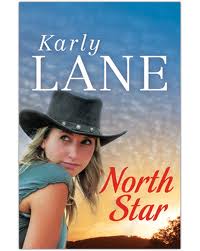
However if you keep up to date with what's going on in the publishing world, you can find opportunities with Australian publishers. I eventually submitted to Allen & Unwin via their Friday pitch sessions I'd heard about. You don't need an agent for this and I was lucky enough to have my soon to be released novel, North Star published by them.
Publishing in Australia is not easy- but having finally achieved my dream, and it's one of the most rewarding things I've ever experienced.

Anyways I hope this blog post helps and people are prepared for the hard slog to getting published. It is no easy thing, but if you have the drive for it and the dream – then MAKE it happen. You decide what route you want to go through and make it work for you!

Friday, July 23, 2010

Guest Blog: Interview with author Mary Victoria - 'Tymon's Flight'

Today we have an interview with Harpercollins Voyager author Mary Victoria Her book 'Tymon's Flight' is due to be released in August. It is the first in the Chronicles of the Tree and is set to be huge! Please check this wonderful author out!!

The World Tree rises up out of the seething clouds like a green mountain, lifting its children up to the light. All creation nestles in its gigantic branches: all take shelter beneath its canopy. There is no world besides this one -- or so the priests in Argos city would have everyone believe. What then if the green God should wither away, or withdraw Her blessings from her children?
Tymon is an orphaned boy growing up at Argos seminary, in the lush heart of the Central Canopy. The Argosian priests have declared science to be a heretical pursuit, and banned travel beyond the confines of the Tree. But Tymon yearns to discover new horizons. He longs to break free of the seminary. When he discovers an interloper in the city baths -- a foreigner, a female, one of the stigmatised Nurian pilgrims brought to the town every year as slaves -- his life changes forever.


Here is our interview with the lovely Mary Victoria:

A&R: Can you please explain your world and the premise of your novel!

‘Tymon’s Flight’ is set in a gigantic tree about the size of a small continent. When trying to visualize such a thing, think of a mountain range like the Himalayas. Replace the earth and rock parts with wood; imagine the snowy regions as branches and leaves. Limbs can be miles long. The trunk is a cliff-face, furrowed and complicated and full of ravines.

This is the only world the inhabitants know. They can’t see the base of the Tree as it is blanketed by impenetrable cloud. They’ve never found another Tree rising through the cloud-cover. They’ve enshrined all their fear and ignorance in a religion and now don’t believe it’s even right to travel beyond the confines of their world. The society Tymon, my lead character comes from, is run by priests. They venerate the World Tree and forbid exploration. Needless to say this isn’t the sort of environment a curious fifteen-year old would be happy in, especially if he’s a charity case taken on by the priests and expected to pay back his debt through a period of indenture.

So Tymon is a misfit in a conservative society. Of course, he’s far luckier than some.

A&R: Are the names of your characters are important? And what do they mean?

Oh yes, names are very important. They conjure up all sorts of associations. The names of the Argosians living in the western half of the Tree have classical Greek overtones (Timon of Athens, Jason and the Argonauts, etc) or else reflect the society’s preoccupation with plants and agriculture (Ferny, Rede, Fallow…) The people in the east also have a few of those Greek names (Solis, Pallas) but in general their language reflects Iranian, Arabic and Indian influences. The word ‘Nur’ means light in Persian. ‘Samiha’ (Samiheh) was my great-grandmother’s name.

Don’t be tempted to extrapolate too much from this, however! The Argosian culture is based on an amalgam of various traditional societies in Europe, India and the Middle East. The Nurians are the pale-skinned barbarians they love to hate. I like to mix things up.

A&R:While writing, do you eat, drink or so anything special to get the writing mojo flowing? Like sports people wearing lucky socks etc..

One word: coffee. Said like this, with a big wide grin: ‘Coff-feeee.’

A&R:Has the dog ever eaten your manuscript?

Actually I once had a cat who chewed on everything I wrote. It was a long time ago and the cat has now gone where cats go, but I think she was trying to tell me something. I wrote poetry, you see. Bad poetry. That cat was an excellent critic.

A&R:What do you think books are for?

Books are for taking me unawares and making me fall in love with a stranger. They are tickets to a whole new country, the author’s mind. A good storyteller will tempt you away like the Pied Piper. I treasure that opportunity to forget myself.

A&R:Which character was the hardest to write? Which one was the easiest?

In this book the most accessible character to me was Tymon, because I knew him fairly well. He has a lot of myself in him – sorry to be so clichĂ©! But that didn’t necessarily make him easier to write. It just meant there was a lot of material to draw on.

It’s funny raiding your own life, background and cultural experience for story material. You feel a tad guilty. The end product is completely unrecognizable, thank goodness.

The most difficult character to write was certainly Samiha. She has a combination of high moral aspirations and great courage, which makes her a little scary – she can be quite uncompromising. It’s tough to write a truly heroic person. Though she does have a wonderfully human side and makes mistakes.

A&R:As a child, when colouring, did you colour within the lines or outside the lines?

Very carefully within the lines at first, before I figured out that I hated colouring. It was far more fun to draw my own stuff. Then I discovered pen and ink in my teens and went all goth, and colour was a no-no anyway.

A&R:Can you describe your desk or office/writing area. Also, does you write at a certain time of day?

I write when I can, which is during the hours my daughter goes to kindy. Or in the evening. There’s no set rhythm, only me throwing myself at the computer whenever the opportunity presents itself.

My desk at the moment is covered in copies of the first book, notes and outlines for the third book, invites to the upcoming launch, and empty coffee cups. It could do with a dusting. I doubt it will get one soon.
Related Posts Plugin for WordPress, Blogger...